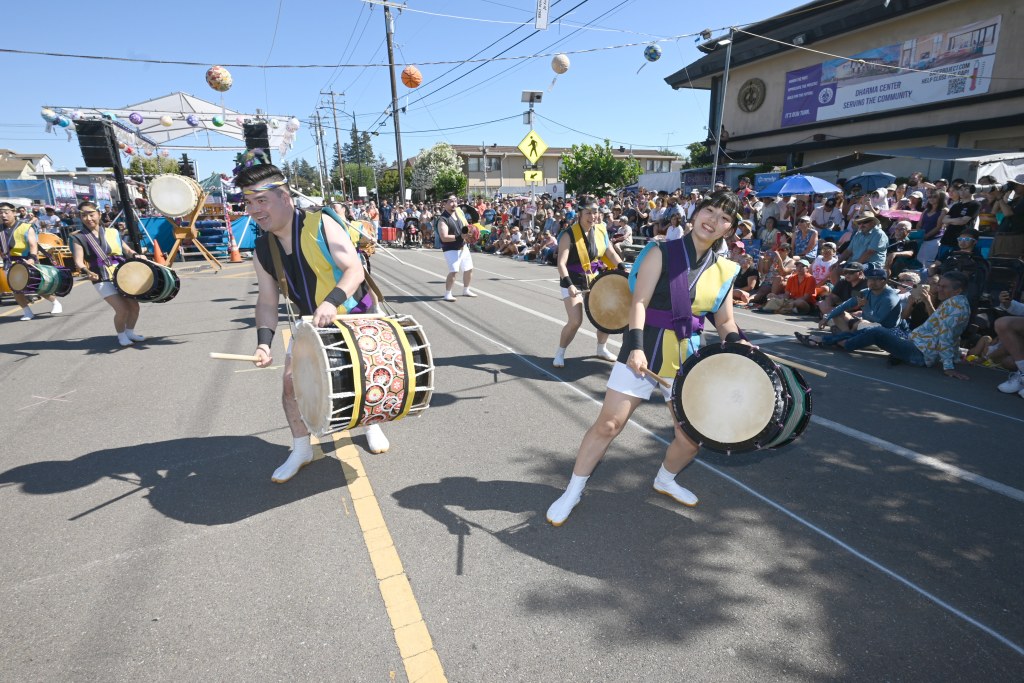
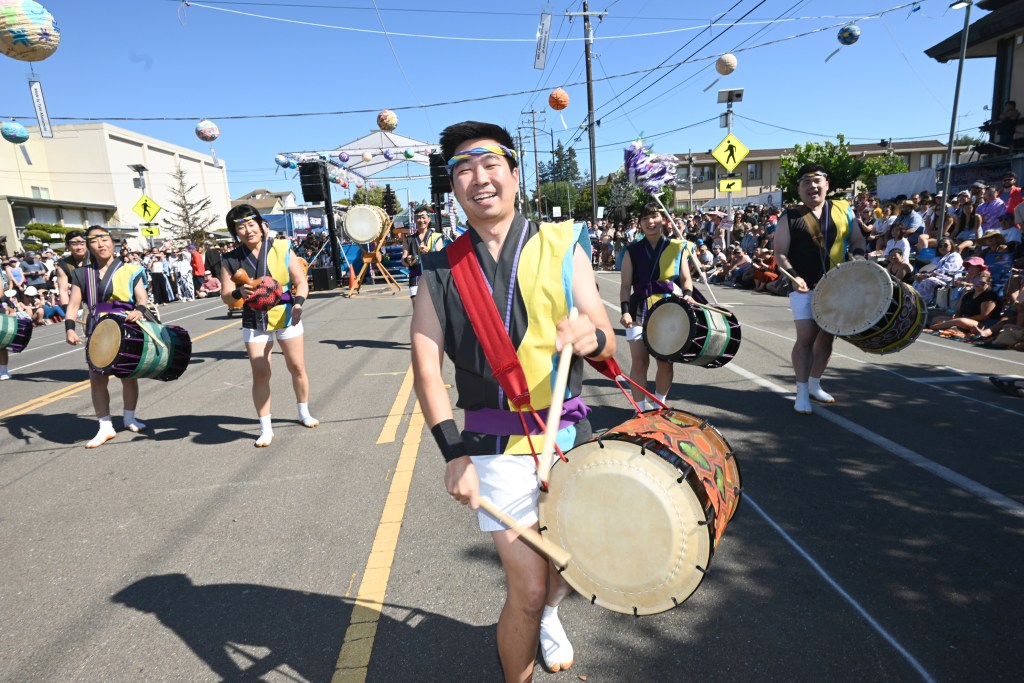
San Jose Taiko at the San Jose Obon Festival July 12-13 2025

“Side Angle Drumming” Saturday July 12 2025 performance
“Two Drummers” Saturday July 12, 2025
Close up of drummer Saturday July 12, 2025
Beginning of set Saturday July 12, 2025
Sunday July 13, 2025 performance
Beginning of Sunday set on July 13, 2025
Senior & Junior members of San Jose Taiko July 13, 2025

San Jose Taiko performance was the highlight of the San Jose Obon on July 12-13 2025.

The group used a large open space to perform and entertain a large and very enthusiastic audience both days.

The outside venue perfectly showed their performance energy, ability, and skill.

Taiko is a happy and joyous activity that can bring people together.

Special thanks to the San Jose Buddhist Betsuin and San Jose Taiko

All Rights Reserved

https://taiko.org/

One-Time
Monthly
Yearly

Your donation will assist the stability and growth of the photography blog. It will assist specifically with internet blogging fees and promotion, computer maintenance, photographic equipment, and some travel expenses. Please make a one-time donation. Thank You.

Make a monthly donation

Make a yearly donation

Choose an amount

$2.00
$5.00
$10.00
$5.00
$15.00
$100.00
$5.00
$15.00
$100.00

Or enter a custom amount

$

Your contribution is appreciated.

Your contribution is appreciated.

Your contribution is appreciated.

DonateDonate monthlyDonate yearly

Kita-Senju in Tokyo

Night time on the West-side of Kita-Senju Station


Kita-Senju is located in Adachi Ward in Tokyo and is full of parks, old-school shopping streets, and a famous fireworks festival. It is known as an Edo-period postal town, where travelers stopped for the night before making their way to the city center. Kita-Senju Station is the third busiest station on the Tokyo Metro Network. It is one of Tokyo’s leading terminal stations with connecting trains such as JR Joban Line, JR Narita Line, and JR Ueno-Tokyo Line. Non-JR railway services include the Hibiya and Chiyoda Line, Tobu Skytree Line, and Tsukuba Express. I’ve visited Kita-Senju several times and it is less crowded but as appealing as other popular areas of Tokyo.


One-Time
Monthly
Yearly

Your donation will assist the stability and growth of the photography blog. It will assist specifically with internet blogging fees and promotion, computer maintenance, photographic equipment, and some travel expenses. Please make a one-time donation. Thank You.

Make a monthly donation

Make a yearly donation

Choose an amount

$2.00
$5.00
$10.00
$5.00
$15.00
$100.00
$5.00
$15.00
$100.00

Or enter a custom amount

$

Your contribution is appreciated.

Your contribution is appreciated.

Your contribution is appreciated.

DonateDonate monthlyDonate yearly

Japanese Wind Chimes

Japanese wind chimes at a Saitama Prefecture road stop 2023.


Japanese wind chimes or furin 風鈴 decorate Japanese houses in the summer. They consist of three parts: the bowl or exterior, known as the gaiken, the bell clapper, zetsu, and the furin, the tanzaku, strips of colorful paper that hang and flutter in the summer breeze. Wind chimes originated in China through fortune-telling called senfutaku. About 1200 years ago, they spread to Japan and were used in Buddhist temples to ward off evil spirits. Today Japanese people use furins to create a sense of coolness to get through Japan’s hot and humid summers.

One-Time
Monthly
Yearly

Your donation will assist the stability and growth of the photography blog. It will assist specifically with internet blogging fees and promotion, computer maintenance, photographic equipment, and some travel expenses. Please make a one-time donation. Thank You.

Make a monthly donation

Make a yearly donation

Choose an amount

$2.00
$5.00
$10.00
$5.00
$15.00
$100.00
$5.00
$15.00
$100.00

Or enter a custom amount

$

Your contribution is appreciated.

Your contribution is appreciated.

Your contribution is appreciated.

DonateDonate monthlyDonate yearly