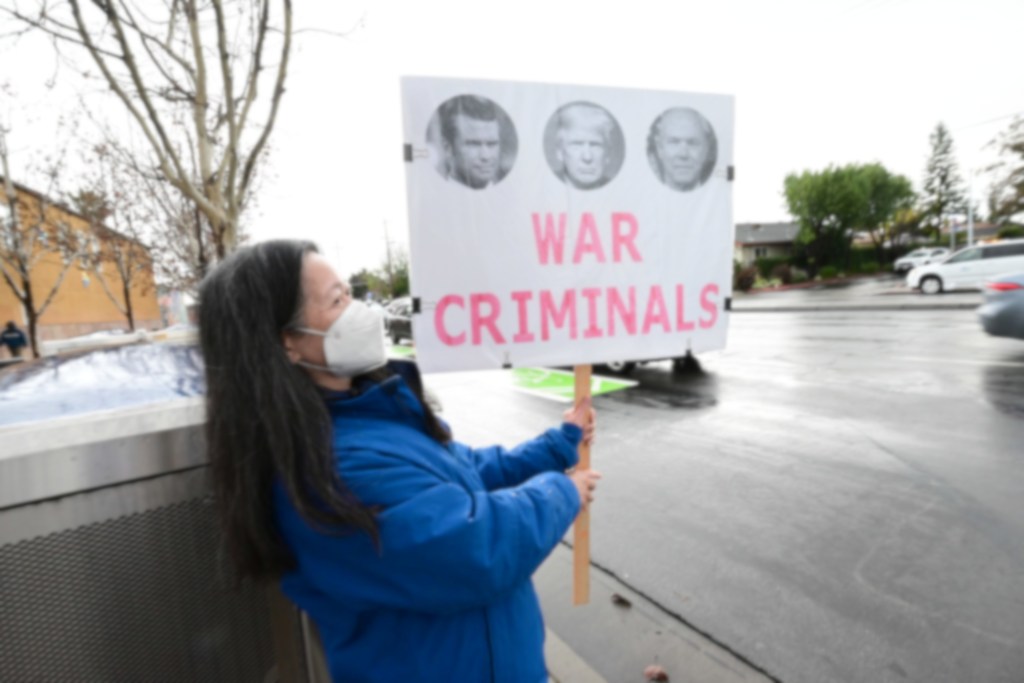
Venezuela emergency protest at Mexican Heritage Plaza San Jose January 4th 2026 guassian blur filter
One-Time
Monthly
Yearly
Your donation will assist the stability and growth of the photography blog. It will assist specifically with internet blogging fees and promotion, computer maintenance, photographic equipment, and some travel expenses. Please make a one-time donation. Thank You.
A common theme at the demo ICE violently and illegally arrested Ulises, a 30-year old husband, father, and resident, on Friday, Feb. 21, 2025, after he was leaving for work, resulting in hospitalization. ICE officers verbally abused Ulises, smashed in his car window with a baton, and violently dragged him out of his car. He is now at risk of being transferred to ICE custody instead of allowed to go home to his family. For questions, please contact the Santa Clara County Rapid Response network at rrninscc@amigosdeguadalupe.org and Elena Hodges at elena@pangealegal.org.
One-Time
Monthly
Yearly
Your donation will assist the stability and growth of the photography blog. It will assist specifically with internet blogging fees and promotion, computer maintenance, photographic equipment, and some travel expenses. Please make a one-time donation. Thank You.
Starting point of march Immigrant women fighting to become citizensImmigrant worker speaking outMarching to the Tesla BuildingRally in front of the Tesla building in Palo Alto
Trumpland where fantasy clashes with reality but it’s not Disneyland
One-Time
Monthly
Yearly
Your donation will assist the stability and growth of the photography blog. It will assist specifically with internet blogging fees and promotion, computer maintenance, photographic equipment, and some travel expenses. Please make a one-time donation. Thank You.
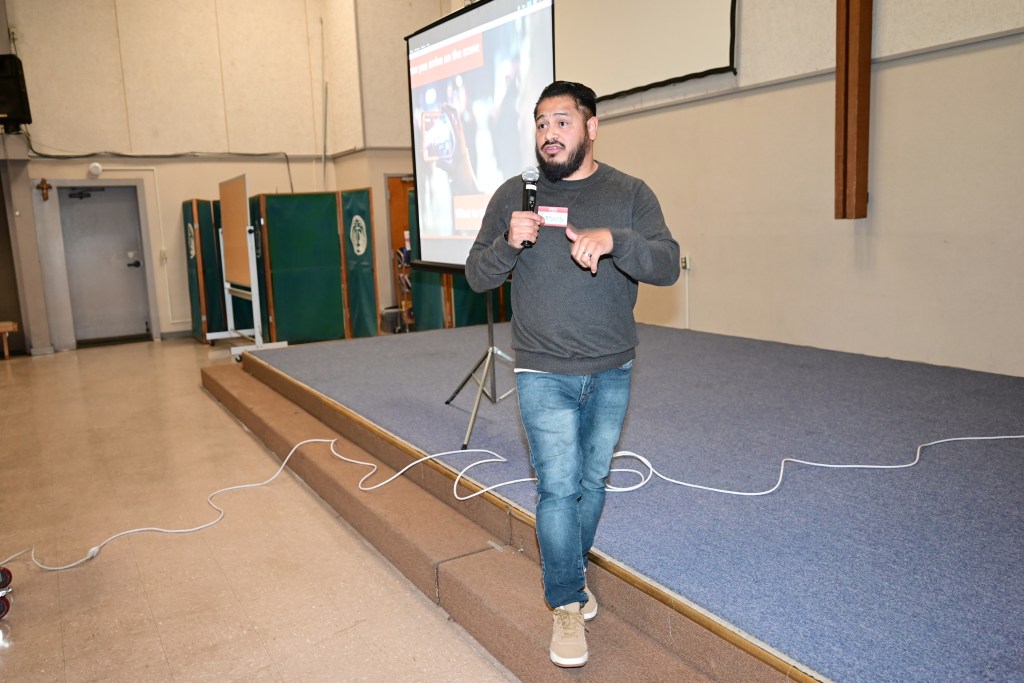
Jesus Ruiz RRN & Pangea Legal ServicesTraining participantsEntire audience
On January 11, 2025 over 125 people participated in a San Jose Japantown training by the Rapid Response Network (RRN) of Santa Clara County. The RRN in Santa Clara County defends immigrant families against threats of deportation and assists with the arrest or detention of a community member. The Rapid Responder Volunteer Trainings initially started during the Trump administration starting in 2017. Immigrant deportations only victimize and criminalize people without really solving the immigration issue. The training was organized by San Jose Nikkei Resisters and co-sponsored by PACT: People Acting in Community Together, Asian Law Alliance, Nihonmachi Outreach Committee, San Jose and Sequoia chapters of the JACL, Wesley United Methodist Church and the San Jose Buddhist Church Betsuin.
One-Time
Monthly
Yearly
Your donation will assist the stability and growth of the photography blog. It will assist specifically with internet blogging fees and promotion, computer maintenance, photographic equipment, and some travel expenses. Please make a one-time donation. Thank You.
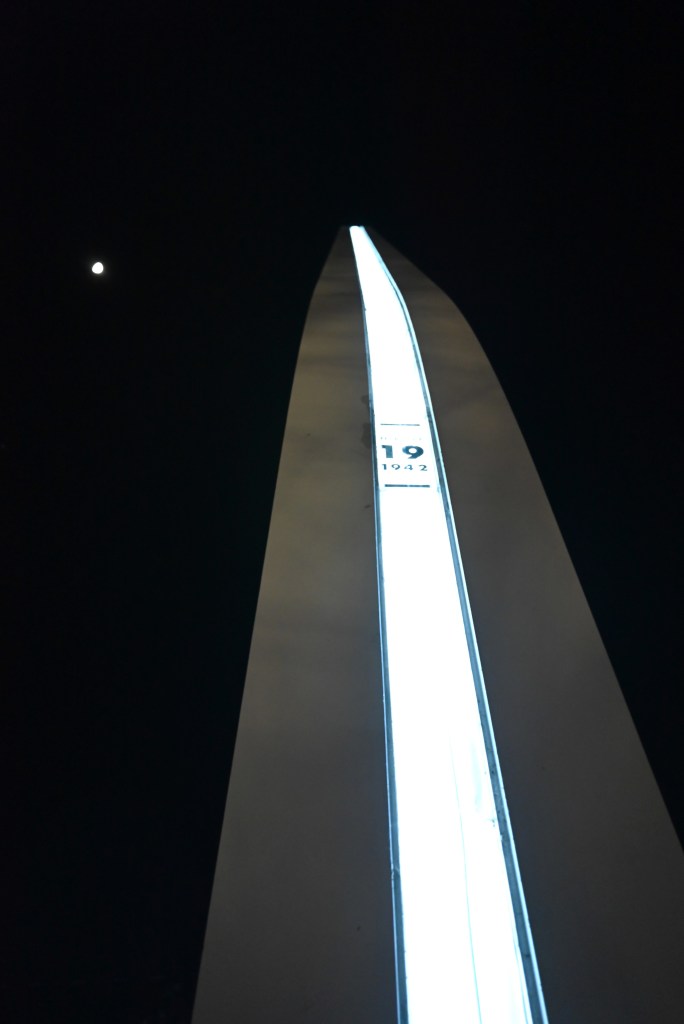
The Nikkei Lantern was created for the perseverance of Japanese Americans. The Lantern is made of white steel, stands over 36 feet high, and it is lit from within by LEDs. This symbol is located on the corner of 5th Street and Jackson in San Jose Japantown. The light at the top the lantern represents eternal hope and serves as reminder of the hardships the Nikkei faced. The lantern inscription, February 19, 1942 represents the date when President Franklin D. Roosevelt signed Executive Order 9066 that interned over 100,000 Japanese Americans to internment camps. The Nikkei Lantern was part of a project funded by California State Senate Bill 307 and the City of San Jose to commemorate the Japanese American experience and was completed in 2008.
One-Time
Monthly
Yearly
Your donation will assist the stability and growth of the photography blog. It will assist specifically with internet blogging fees and promotion, computer maintenance, photographic equipment, and some travel expenses. Please make a one-time donation. Thank You.
Why students are protestingSproul Plaza UC Berkeley in Berkeley, CA
One-Time
Monthly
Yearly
YOUR DONATION WILL ASSIST THE STABILITY AND GROWTH OF THE PHOTOGRAPHY BLOG. IT WILL ASSIST SPECIFICALLY WITH INTERNET BLOGGING FEES AND PROMOTION, COMPUTER MAINTENANCE, PHOTOGRAPHIC EQUIPMENT, AND SOME TRAVEL EXPENSES. PLEASE MAKE A ONE-TIME DONATION. THANK YOU.
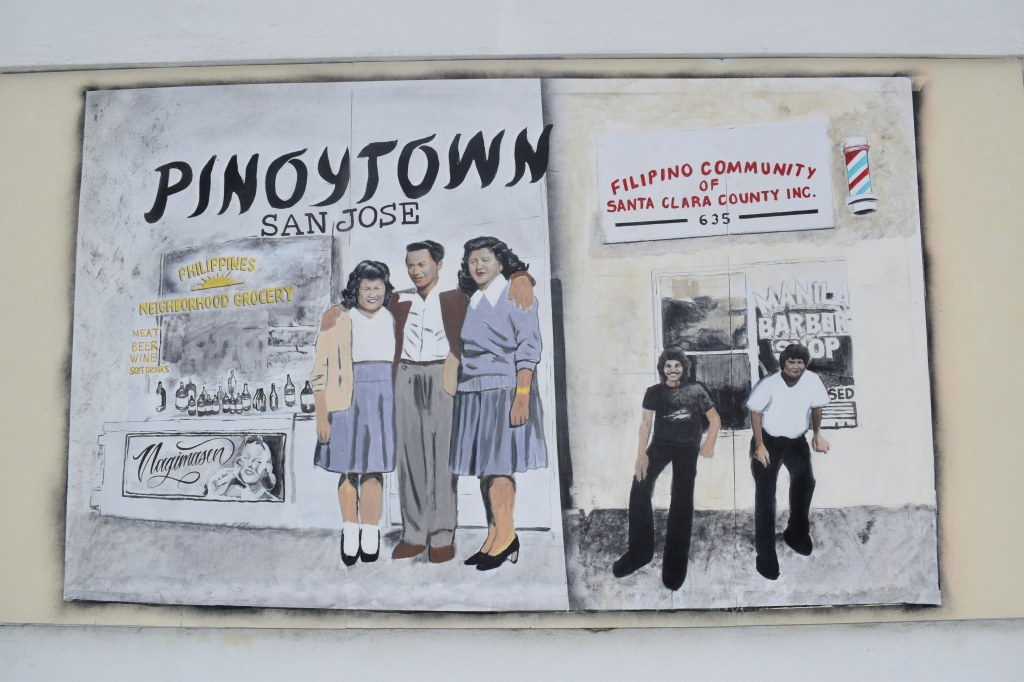
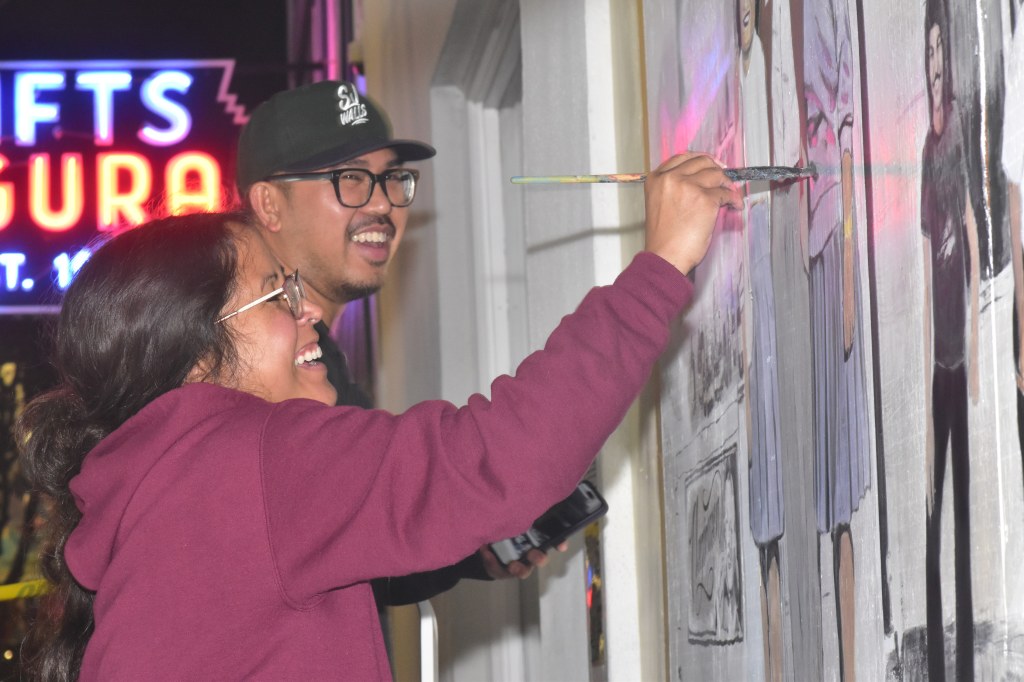
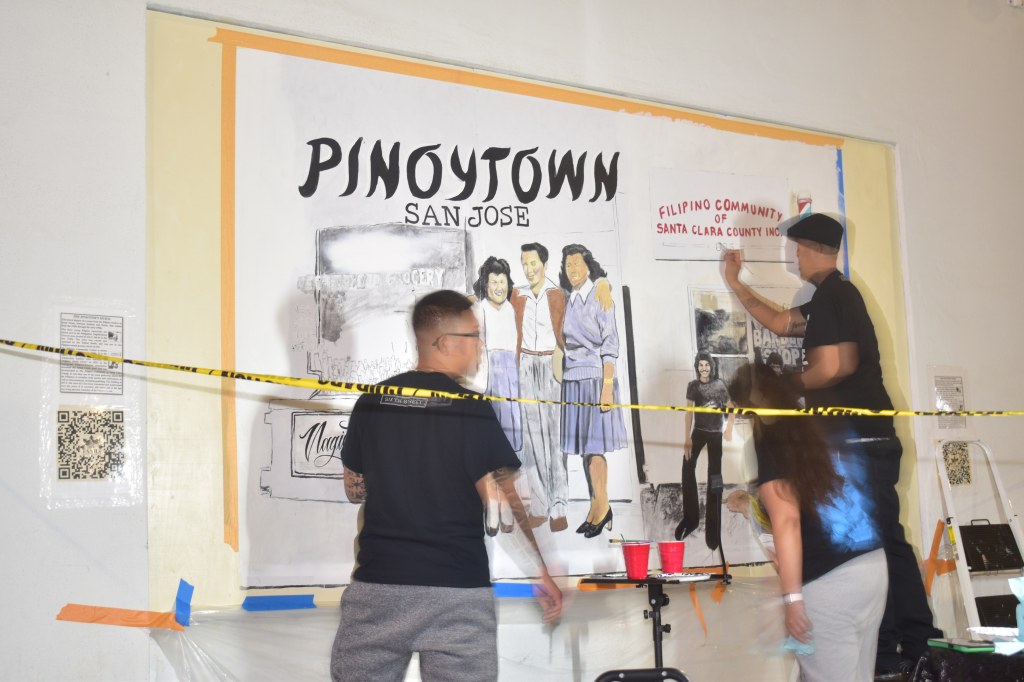
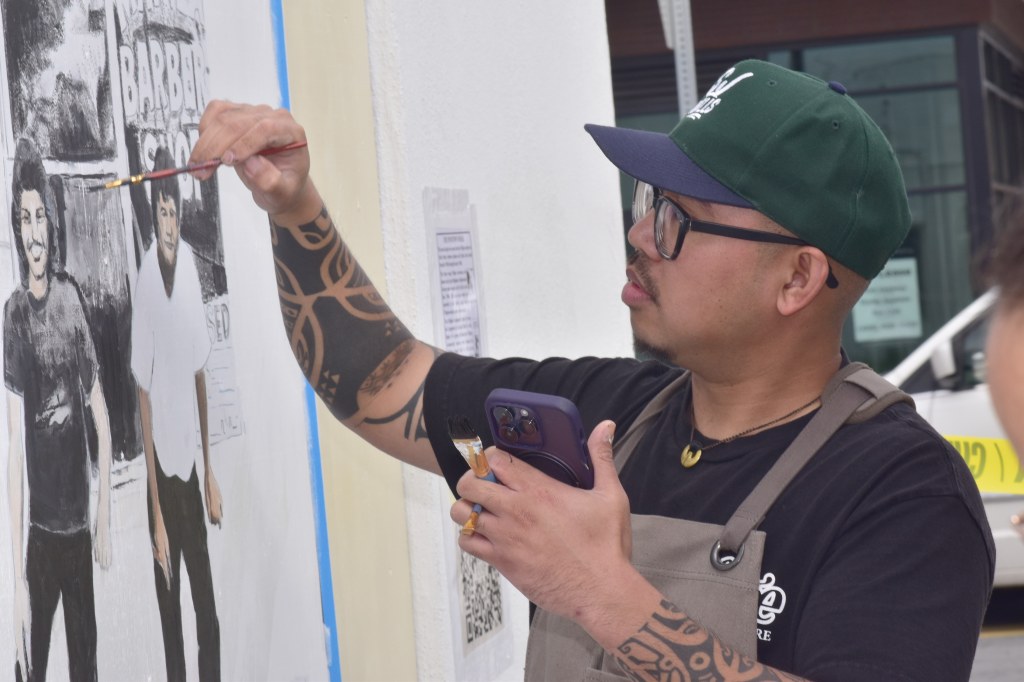
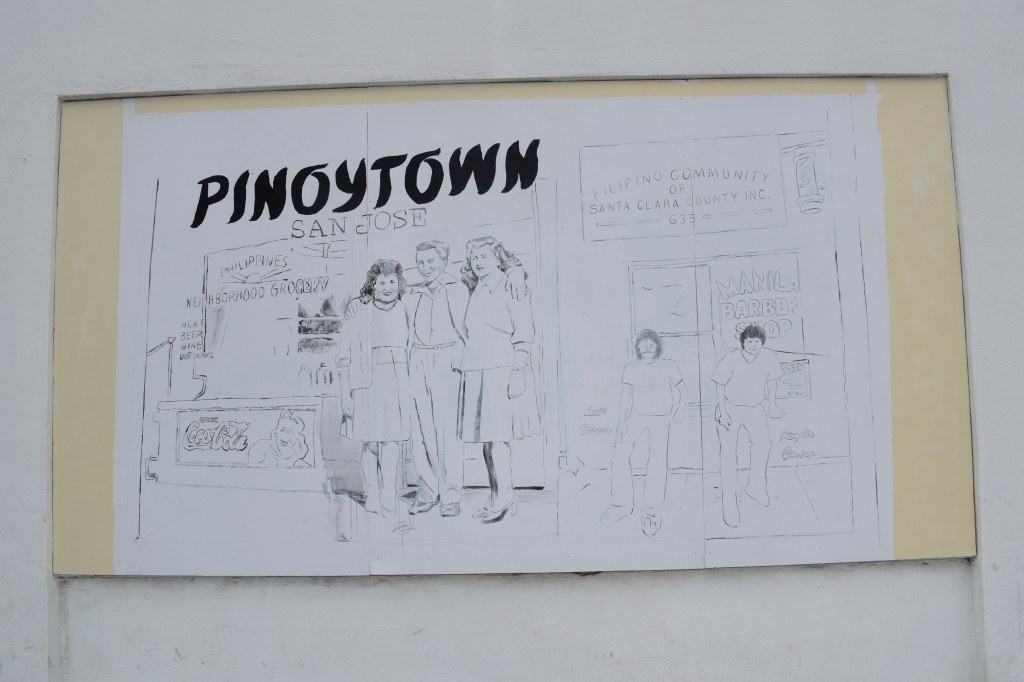
Pinoytown mural finished February 13, 2024Analyn (Ana) Bones & Jordan GabrielPicture of Jordan, Analyn, and Abraham Menor using slow shutter & rear curtain synchJordan Gabriel close upAnalyn & Jordan posing in front of mural with their painting toolsMural outline on the 2nd day of mural project
The beginnings on Pinoytown started from a 1887 Chinese immigrant settlement in San Jose that was also burned down in 1887 due to racial discrimination. Because of those reasons John Heinlein formed Heinlenville Chinatown on North 6th Street between Jackson and Taylor Streets in San Jose as a means of protection against hostility. Later on the first wave of Filipinos immigrants came to America in 1920s to the 1930s. Then during 1942 the Japanese-Americans were shipped to internment camps so some buildings and vacant buildings were filled by Filipinos and became Pinoytown. During the height of Pinoytown there were Filipino businesses and residences on both sides of 6th Street from restaurants, pool halls, barber shops, grocery stores, laundries, a church, barangay organizations, and a Filipino Youth Club. But Pinoytown declined in the 1960s due to demographic changes.
The Pinoytown mural artists are Jordan Gabriel and Analyn (Ana) Bones. They were supported and assisted by Rene Munoz, Abraham Menor, and Robert Ragsac. The mural is located in San Jose Japantown on the corner of 6th & Jackson in San Jose Japantown (Kogura’s). Assistance of the mural came from Empire Seven Studios & Kogura Company and sponsored by Filipino American National Historical Society Santa Clara Valley.
YOUR DONATION WILL ASSIST THE STABILITY AND GROWTH OF THE PHOTOGRAPHY BLOG. IT WILL ASSIST SPECIFICALLY WITH INTERNET BLOGGING FEES AND PROMOTION, COMPUTER MAINTENANCE, PHOTOGRAPHIC EQUIPMENT, AND SOME TRAVEL EXPENSES. PLEASE MAKE A ONE-TIME DONATION. THANK YOU.
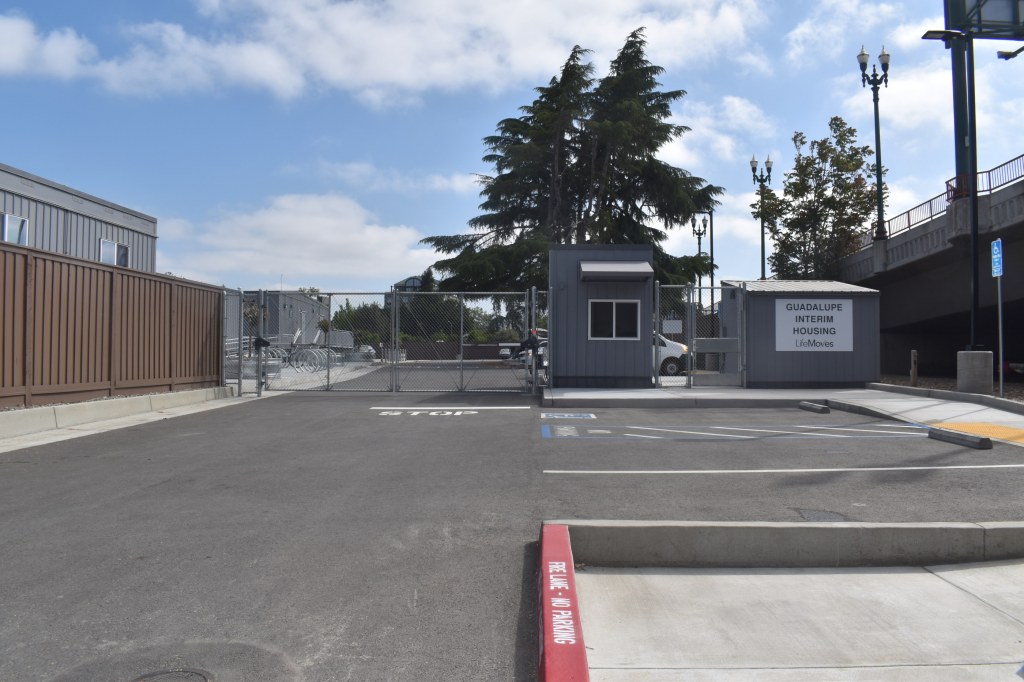
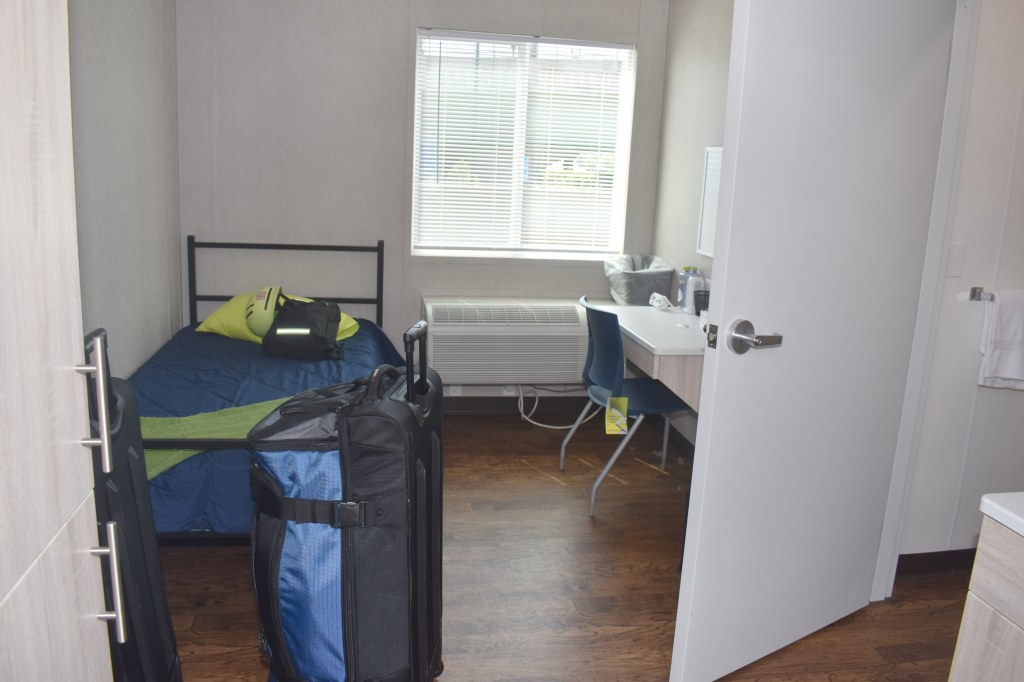
Guadalupe Interim Housing entrance & exit LiveMoves San Jose
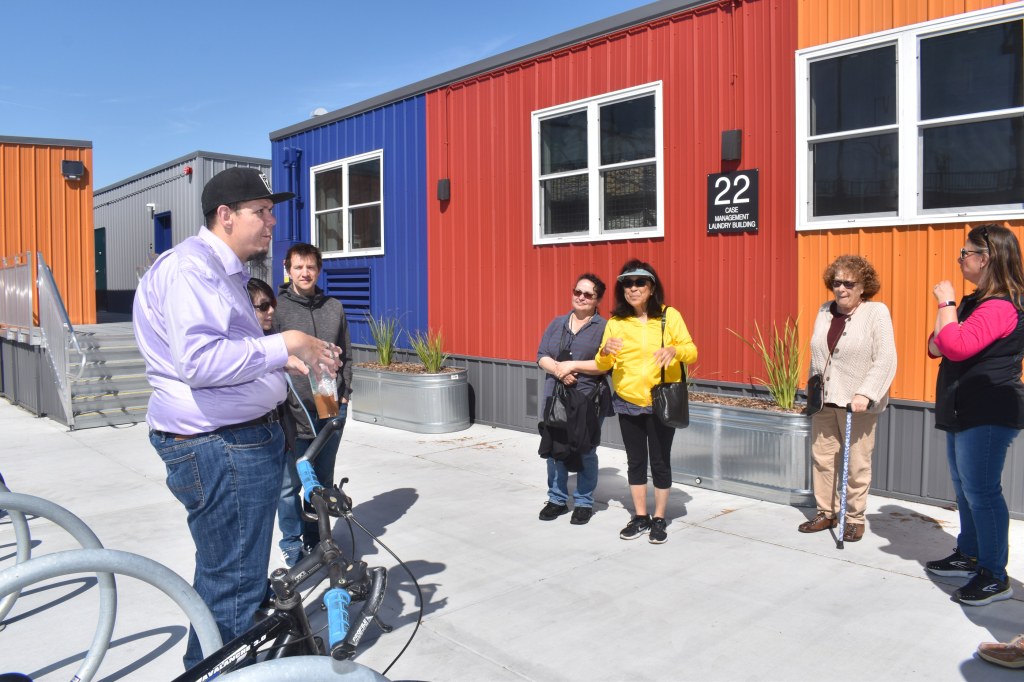
Robert Smith, a program director of the LifeMoves site, gives Japantown Neighborhood Association (JNA) & other nearby neighborhood associations a public tour
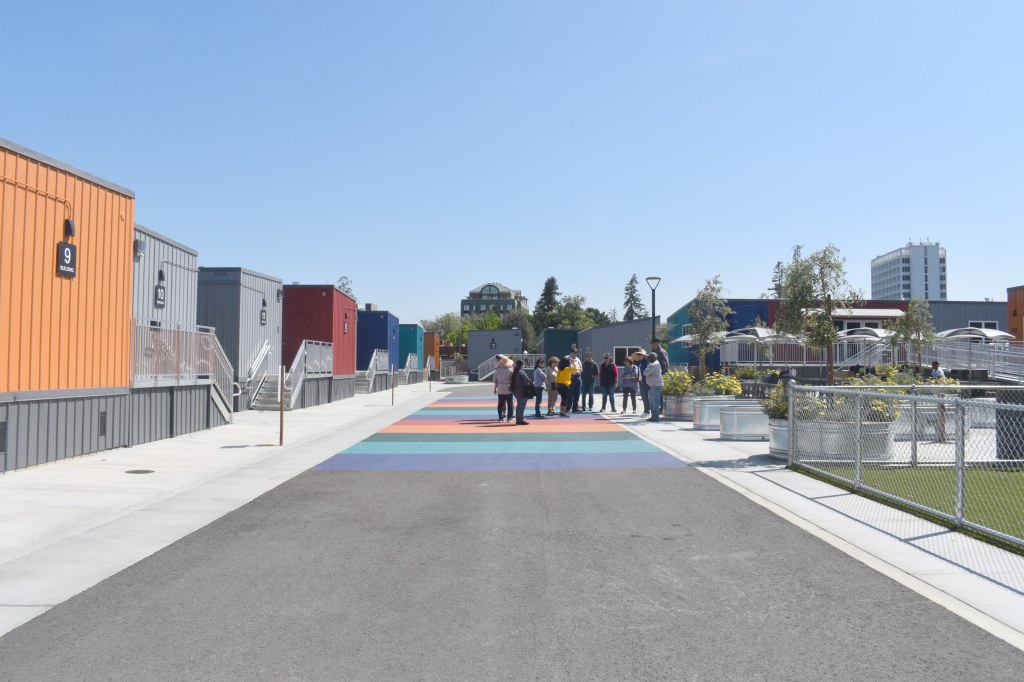
Wider view of Guadalupe Interim Housing facility
Laundry Room (free) at the Guadalupe Interim Housing
Resident is just moving in today
There is a new interim (temporary) shelter for San Jose’s growing homeless population at the approximately $17 million Guadalupe Interim Housing (Guadalupe Parkway & Mission Street) created by LifeMoves. LifeMoves is a nonprofit organization dedicated to finding solutions to homelessness in Silicon Valley. This is a facility for people who have been living in the homeless encampment near Guadalupe River & Spring Street in San Jose. This project is part of the Bridge Program, a project of the City of San Jose that hires homeless people to pick up trash. Residents of the shelter are told to follow rules such as daily welfare checks and weekly room checks. However, the staff is respectful to the residents. At the present time, there are 22 residents in the facility, with a future capacity of 96 residents. There is a community kitchen and laundry room on site. A case management office provides on-site services. The facility will have a friendly 16:1 staff to client ratio. In addition, residents will be offered employment with Goodwill and hopefully transition to permanent housing in the future.
Your donation will assist the stability and growth of the photography blog. It will assist Specifically with internet blogging fees and promotion, computer maintenance, photographic equipment, and some travel expenses. Please Make a one-time donation. Thank You.
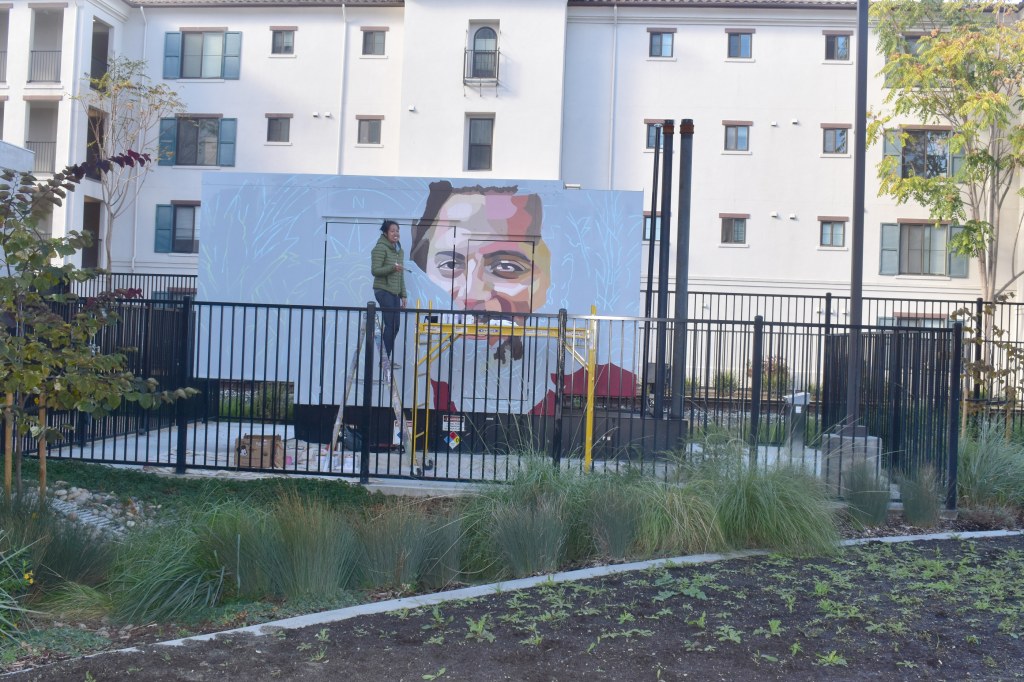
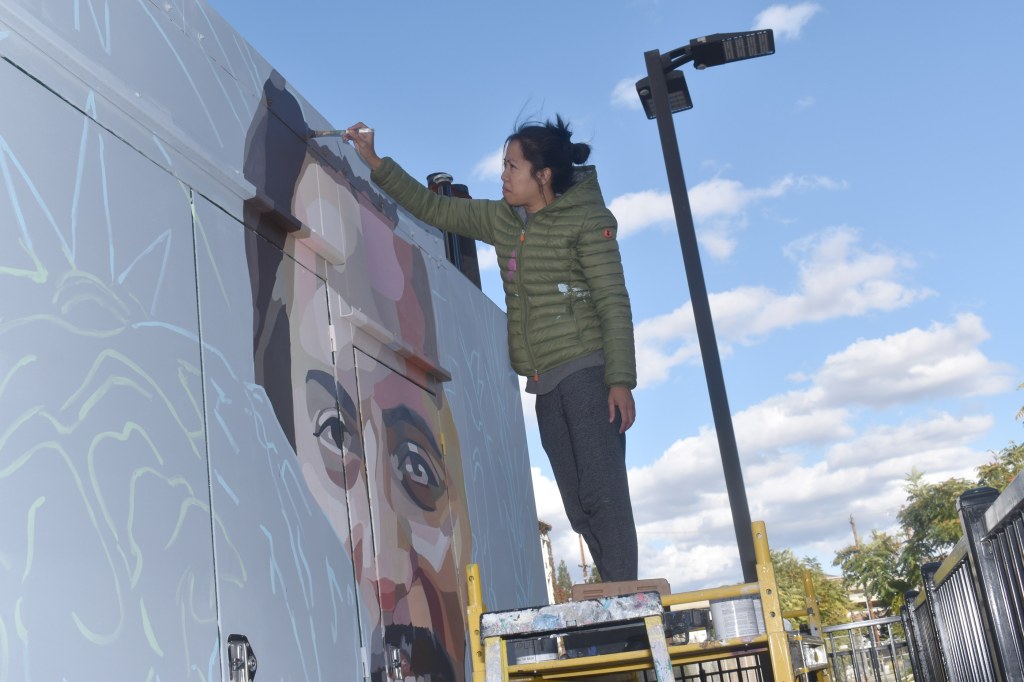
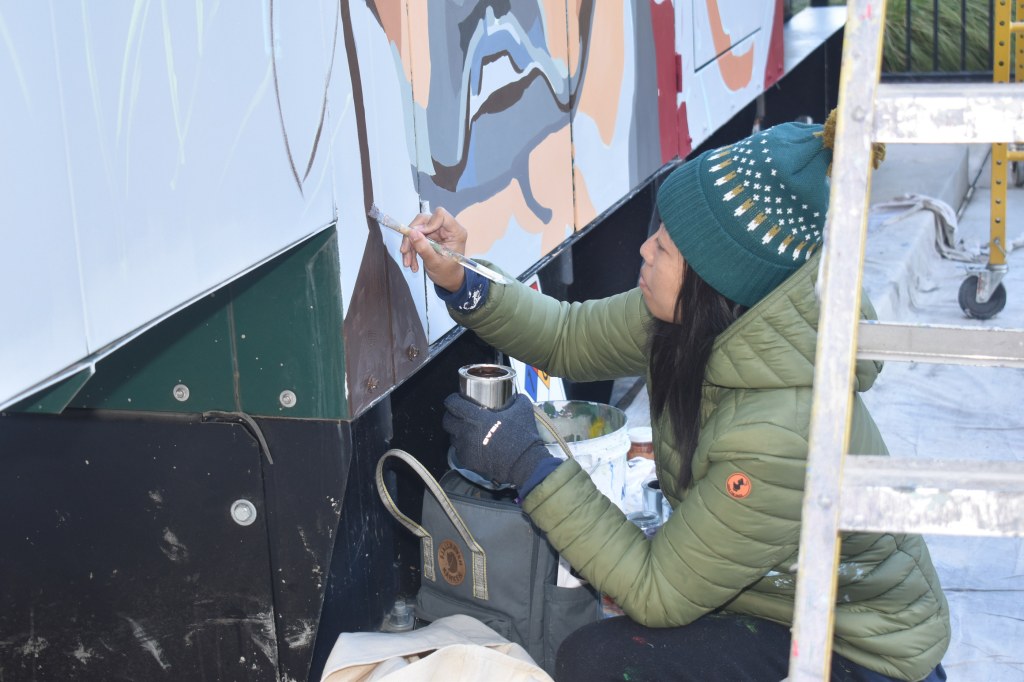
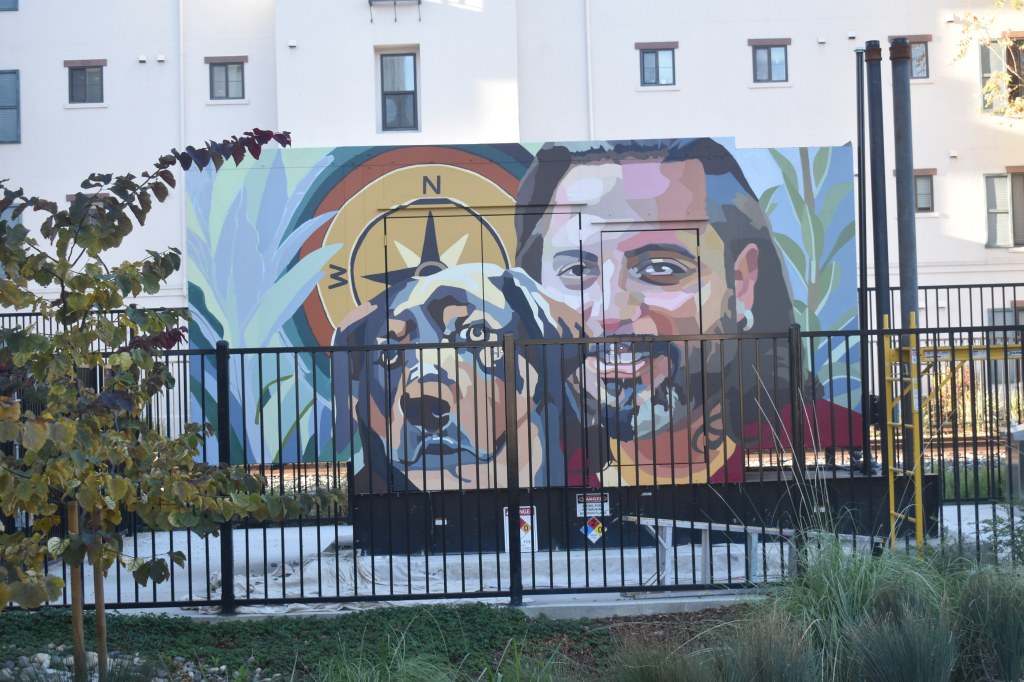
Roan Victor, a fine art painter, muralist, and youth arts educator based in San Jose Japan-town, painted a mural to honor Tom Iamesi an affordable housing professional and mentor in the San Francisco Bay Area who passed away in 2020. Iamesi Village was named after Tom Iamesi and is a new low income housing by First Community Housing in San Jose located at 201 Bassett Street and Terraine Street near downtown San Jose. Painting of mural was assisted by Sean Boyles and Marc Wallace who are also San Jose Japan-town artists. This mural was organized and sponsored by Empire Seven Studios in San Jose Japantown.
One-Time
Monthly
Yearly
Your donation will assist the stability and growth of the photography blog. It will assist Specifically with internet blogging fees and promotion, computer maintenance, photographic equipment, and some travel expenses. Please Make a one-time donation.
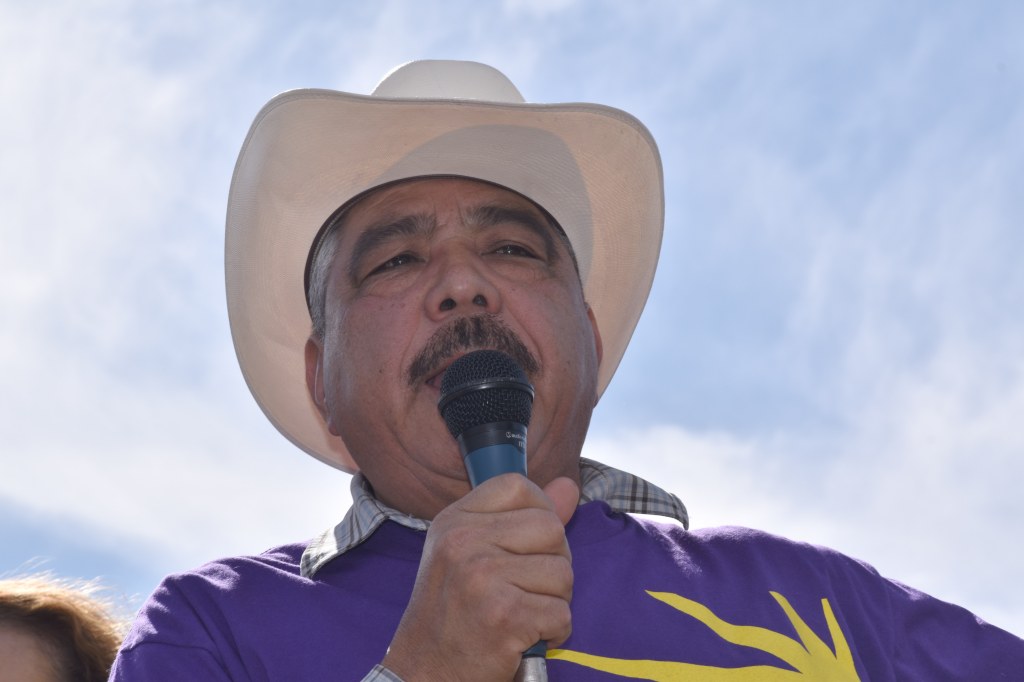
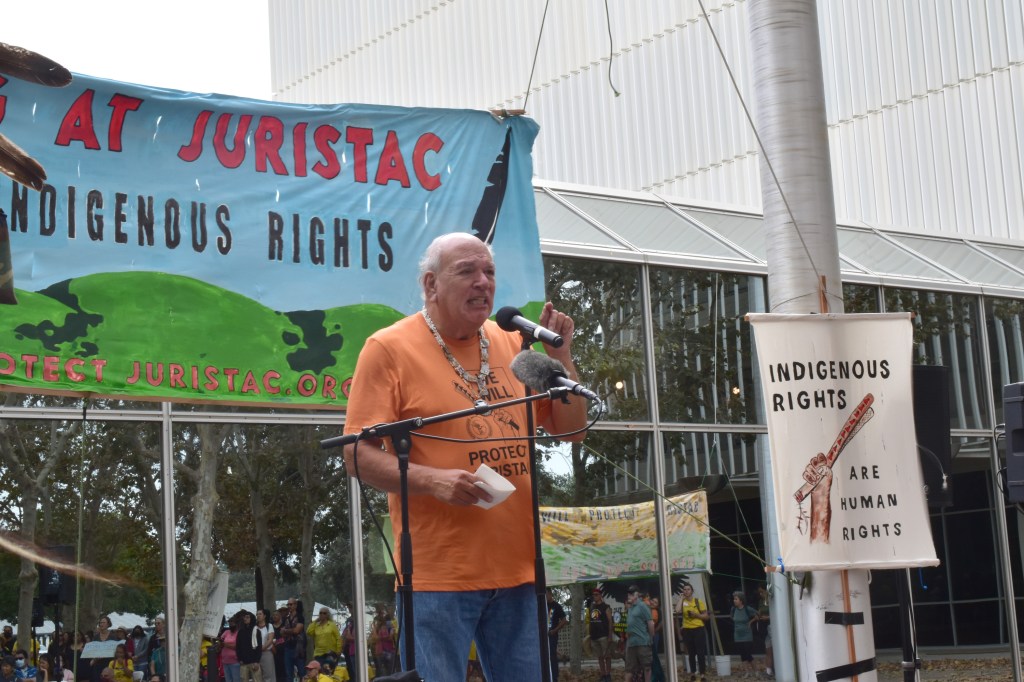
Valentin Lopez, Chair, Amah Mutsun Tribal Band at rally for Juristac at County Government Building in San Jose on Saturday September 10th 2022
The Amah Mutsun Tribal Band is in a battle to protect sacred Juristic site from the proposed Sargent Ranch Quarry. Juristic (“Place of the Big Head in Mutsun language) is the center of ancestral homeland near Gilroy, CA. Historically the Amah Mutsun Tribal Band are survivors of the destructive power and authority of Mission San Juan Bautista and Mission Santa Cruz. And the proposed mining development of the Juristac is the modern day continuation of these inhumane and unjust policies.
A San Diego-based investment group applied for the permit from Santa Clara County to establish 403 acre sand and gravel mining operation. Three open-pit quarry sites 250 deep and 62 acre processing plant and 1.6 mile conveyor belt are proposed for the site. A 60 day public comment period ends on September 26th, 2022 with over 20,000 people signing the Amah Mutsun petitions and numerous officials and community leaders supporting Juristac.
According to the Santa Clara County Draft Environmental Impact Report there will be multiple significant and unavoidable harmful impacts such as biological resources, air quality, traffic and tribal resources (sacred sites), and is eligible for California Register of Historical Resources. The mining would also eliminate habitat for the California red-legged frog and California tiger salamander, both federally-listed threatened species. The loss of grasslands would also impact the American badger, and birds of prey that forage in the area such as the Golden Eagle, Northern Harrier, Prairie Falcon and Burrowing Owl.
“Juristac is the heart of Amah Mutsun spiritually and culture, and an open-pit sand and gravel mine would forever desecrate this sacred place,” said Valentin Lopez chair of Amah Mutsun Tribal Band.
Your donation will assist the stability and growth of the photography blog. It will assist Specifically with internet blogging fees and promotion, computer maintenance, photographic equipment, and some travel expenses. Make a one-time donation.










 Our Lives Our Photographs